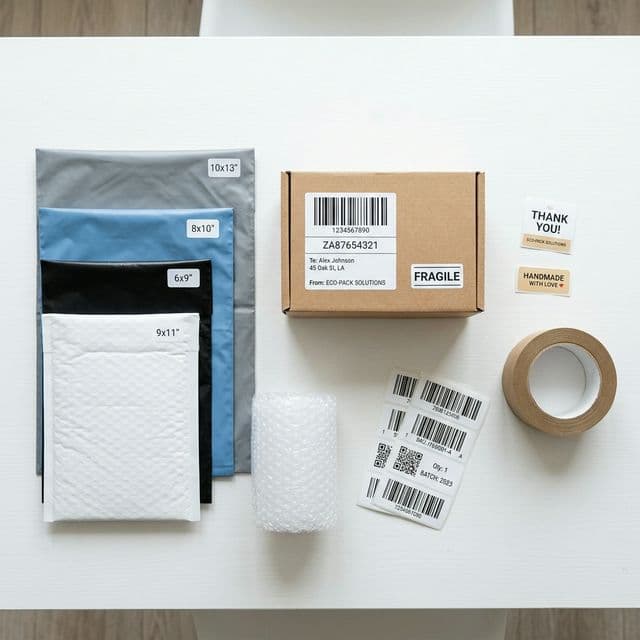
Good packaging protects your product, reduces returns, and builds your brand. Here is everything Indian e-commerce sellers need to know about packaging materials, costs, and best practices.
Why Packaging Matters More Than You Think
For e-commerce sellers, your packaging is the first physical interaction a customer has with your brand. Unlike a retail store where customers touch and feel products before buying, online buyers form their first impression when the package arrives at their door.
Good packaging:
- Protects the product during transit (reducing damage-related returns)
- Creates a positive unboxing experience (leading to better reviews)
- Builds brand recognition (professional packaging = trustworthy seller)
- Reduces RTO (products that arrive in good condition are less likely to be refused)
Bad packaging:
- Damages products (leading to returns, refunds, and bad reviews)
- Looks unprofessional (customers associate poor packaging with poor product quality)
- Wastes money (using oversized boxes or excessive materials)
On major Indian marketplaces, RTO (Return to Origin) rates average 20–30% for fashion categories. Damage during transit is one of the top three reasons customers refuse delivery, so investing a few rupees more in packaging directly reduces your RTO cost.
Types of Packaging Materials
1. Corrugated Boxes
Best for: Electronics, fragile items, heavy products, premium products
Common sizes for e-commerce:
| Size (L x W x H) | Best For |
|---|---|
| 150 x 100 x 50 mm (6 x 4 x 2 in) | Small accessories, jewelry |
| 200 x 150 x 100 mm (8 x 6 x 4 in) | Small gadgets, cosmetics |
| 300 x 200 x 150 mm (12 x 8 x 6 in) | Clothing, medium electronics |
| 400 x 300 x 200 mm (16 x 12 x 8 in) | Large items, appliances |
Cost: ₹5–25 per box depending on size and ply. Use 3-ply (3 mm wall thickness) for items under 2 kg and 5-ply (5–6 mm wall thickness) for heavy or fragile goods.
Buying tip: Purchase in bulk (100+ units) from packaging suppliers on IndiaMart or local wholesale markets for 30–40% savings compared to retail.
2. Polybags (Courier Bags)
Best for: Fashion items, soft goods, non-fragile products
Polybags are the most popular packaging for Indian e-commerce sellers because they are:
- Lightweight (reduces shipping cost)
- Waterproof (protects against rain during delivery)
- Tamper-evident (has adhesive closure)
- Space-efficient for storage
Common sizes:
| Size (inches) | Approx mm | Best For |
|---|---|---|
| 6 x 8 | 152 x 203 | Small accessories, scarves |
| 8 x 10 | 203 x 254 | T-shirts, small clothing |
| 10 x 12 | 254 x 305 | Kurtis, dresses |
| 12 x 16 | 305 x 406 | Large clothing, bedsheets |
| 16 x 20 | 406 x 508 | Bulky items, multiple pieces |
Cost: ₹1.5–5 per bag depending on size and thickness. Use a minimum of 60 microns for durability; heavy garments benefit from 80-micron bags.
3. Bubble Wrap
Best for: Wrapping fragile items inside boxes
Use bubble wrap for:
- Glass products (decor, kitchenware)
- Electronics (phones, gadgets, accessories)
- Ceramic items (mugs, pots)
- Any product that can crack, chip, or scratch
Cost: ₹400–600 per roll of approximately 50 metres x 500 mm wide (small 10-metre rolls cost ₹80–120 and suit low-volume sellers).
Tip: For small sellers, pre-cut bubble wrap squares are more efficient than cutting from a roll each time. A 150 x 150 mm square is enough to wrap a standard mug.
4. Packing Tape
Use quality tape — cheap tape peels off during transit, especially in humid conditions.
- BOPP tape: Standard brown packing tape, 48 mm (2 inch) or 72 mm (3 inch) width
- Branded tape: Custom printed with your brand name (adds professionalism at scale)
Cost: ₹30–60 per roll (48 mm x 65 m). Apply a minimum of two overlapping strips across each flap seam for a secure closure.
5. Filler Materials
For items that don't fill the entire box:
- Crumpled newspaper: Free, readily available, eco-friendly
- Air pillows: Lightweight, take up space without adding weight
- Thermocol pieces: Cheap but not eco-friendly
- Shredded paper: Good for premium or gift products; a 500 g pack of kraft shredded paper costs around ₹80–120
Cost Optimization Strategies
Right-Size Your Packaging
The biggest waste in Indian e-commerce packaging is using boxes that are too large for the product:
- A small pair of earrings doesn't need a 300 x 200 mm box
- A single T-shirt doesn't need a 5-ply corrugated box
Use this rule: The package should be just large enough to hold the product with minimal cushioning. No more.
Oversized packaging also triggers volumetric weight charges on most couriers. A box measuring 30 x 20 x 20 cm has a volumetric weight of 1.2 kg (using the standard 5000 divisor). If your product actually weighs only 400 g, you pay for 1.2 kg — an extra ₹30–60 per shipment depending on the courier.
Calculate Your Packaging Cost Per Order
Every seller should know their exact packaging cost per order:
| Component | Typical Cost |
|---|---|
| Box or polybag | ₹3–15 |
| Bubble wrap (if needed) | ₹2–5 |
| Tape | ₹1–2 |
| Label (thermal) | ₹1–2 |
| Filler (if needed) | ₹1–3 |
| Total per order | ₹8–27 |
Factor this into your product pricing using a profit calculator. Many new sellers forget packaging costs and end up selling at lower margins than expected.
Buy in Bulk Seasonally
Before major sale events (Diwali, Mega Sales in 2026), buy packaging materials in bulk:
- Prices increase 15–20% during peak season due to demand
- Delivery times for packaging suppliers also increase
- Running out of packaging material during a sale event is a nightmare
As a rule of thumb, stock enough packaging for at least 1.5x your expected sale-event order volume. If you sold 500 units during last year's Diwali sale, stock materials for 750 units before the 2026 season.
Shipping Label Placement and Quality
Your shipping label is a critical part of the package. If the courier can't scan the barcode or read the address, the package either gets delayed or returned.
Label placement rules:
- Place the label on the largest flat surface of the package
- Never place labels on seams, folds, or edges
- Don't place labels under tape — the reflection causes scanning issues
- For polybags, place the label in the clear window (if the bag has one) or on a flat area
Label quality requirements:
- Print on thermal label paper (not regular paper taped to the package)
- Ensure barcodes are not cut off — crop labels properly before printing
- Print at 203 dpi minimum; 300 dpi for crisp barcodes on a direct-thermal printer
- Print at 100% scale, not
Frequently Asked Questions
What is the cheapest packaging material for Indian e-commerce sellers?
Polybags (courier bags) are the most cost-effective option, starting at ₹1.5 per bag. They work well for non-fragile items like clothing, soft toys, and accessories. Use a minimum thickness of 60 microns so the bag does not tear during transit.
How much does packaging typically cost per order in India?
For most small sellers, packaging costs range from ₹8 to ₹27 per order. This includes the box or polybag (₹3–15), bubble wrap if needed (₹2–5), tape (₹1–2), a thermal label (₹1–2), and filler material (₹1–3). Always factor this into your product price.
What is the standard shipping label size for Indian couriers?
All major Indian couriers — Shiprocket, Delhivery, Bluedart, Ecom Express — accept labels at 100 x 150 mm (4 x 6 inches). Marketplace-generated labels are usually in A4 format and must be cropped before printing. Use Q Crop Label to convert A4 labels to the correct 4x6 thermal format automatically.
Should I use 3-ply or 5-ply corrugated boxes?
Use 3-ply boxes (approximately 3 mm wall thickness) for products weighing under 2 kg that are not fragile. Use 5-ply boxes (5–6 mm wall thickness) for heavy items over 2 kg, fragile goods like glassware, or high-value electronics. The cost difference is roughly ₹3–8 per box, which is far cheaper than a damage-related return.
How can I reduce volumetric weight charges on my shipments?
Use right-sized packaging. Couriers calculate volumetric weight as (L x W x H in cm) ÷ 5000. A box that is 10 cm too wide can add 0.4 kg of volumetric weight, costing you an extra ₹20–50 per shipment. Stock two or three box sizes that closely match your most common product dimensions rather than using one large box for everything.
About Q Crop Label
Q Crop Label helps 100,000+ Indian e-commerce sellers optimize their shipping workflow. We write about thermal printing, label management, and practical tips to help Amazon, Meesho, and Flipkart sellers save time and money on every order.